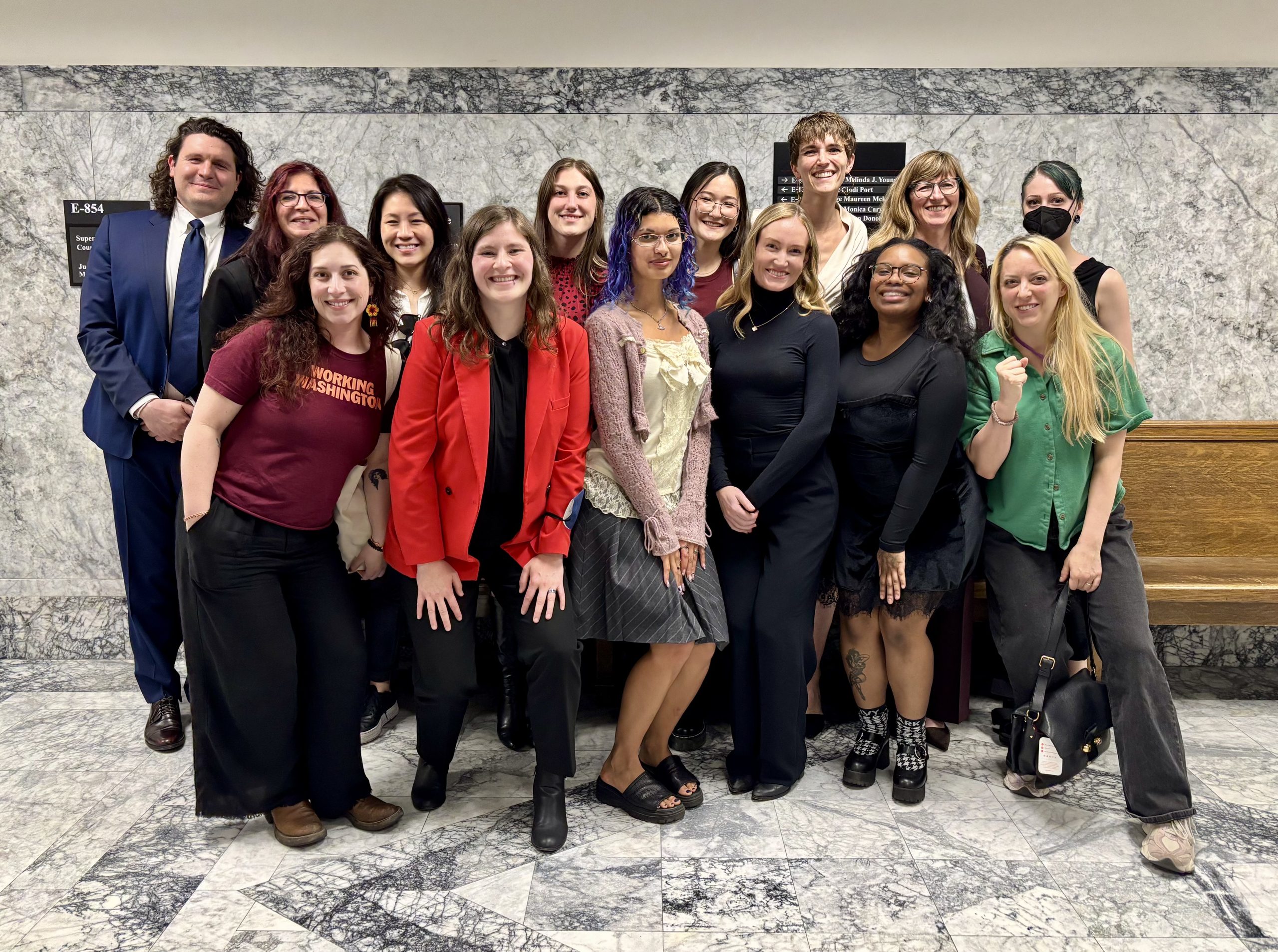
Last month, 70 bikini baristas in Washington who joined together to enforce their rights won $1.85 million in unpaid wages and damages. The organizing that led to this victory in court started when workers, long isolated from one another, began to build trust and, from that, gained the confidence to speak out about the abuses they were experiencing.
Mykie“I got involved in the case because I feel that it’s very important to not be mistreated in any job you work. I genuinely do have a love for the bikini coffee industry; I loved that job, and I don’t think there’s any reason bikini baristas should be treated differently as employees and workers.”
If you’re ready to build power to win similar fights, join us by becoming a member!
Pattern of exploitation
That allowed workers to recognize a pattern of wage theft and workers’ rights violations across all of the stands at Beehive Espresso. Their isolation helped their boss maintain control, but when workers started breaking through it to build relationships, they realized that they were more protected and powerful together.
Workers said the company didn’t properly track hours, that time worked was rounded down, work outside of scheduled shift times went unpaid, and on occasions when two workers were on the same shift, only one of them was paid. All of that was plainly illegal. As was the absurd sales goal system where the workers were expected to give up not only their tips, but also parts of their wages, in order to meet them or else risk getting schedules reduced or fired altogether.
Breaking through isolation
As one former worker explained, bad bosses can get away with exploitation like that for years when they can count on workers not knowing their rights, being afraid to speak up, or feeling like they are powerless to demand what they’re owed.
Eilish“…breaking through that isolation and building trust was one of the first big barriers we had to overcome in order to join together for what we were rightfully owed.”
One of the first organizing challenges was getting in contact with one another. This was made challenging because most baristas worked alone and workers had to create their own ways to communicate with workers at coffee stands spread out across multiple counties. Social media allowed workers to make connections and turn scattered conversations into something more organized. One barista reflected that sometimes people enduring workplace abuses cling to the hope that someone else might do something about the situation. Once workers knew other baristas were willing to stand beside them, taking action no longer felt like a risk they had to face on their own.
This early organizing is what allowed the effective class action lawsuit to be a viable option in the first place. The workers were represented by our sister organization Working Washington Rights Center (formerly Fair Work Center) and co-counsel at Schroeter Goldmark & Bender.